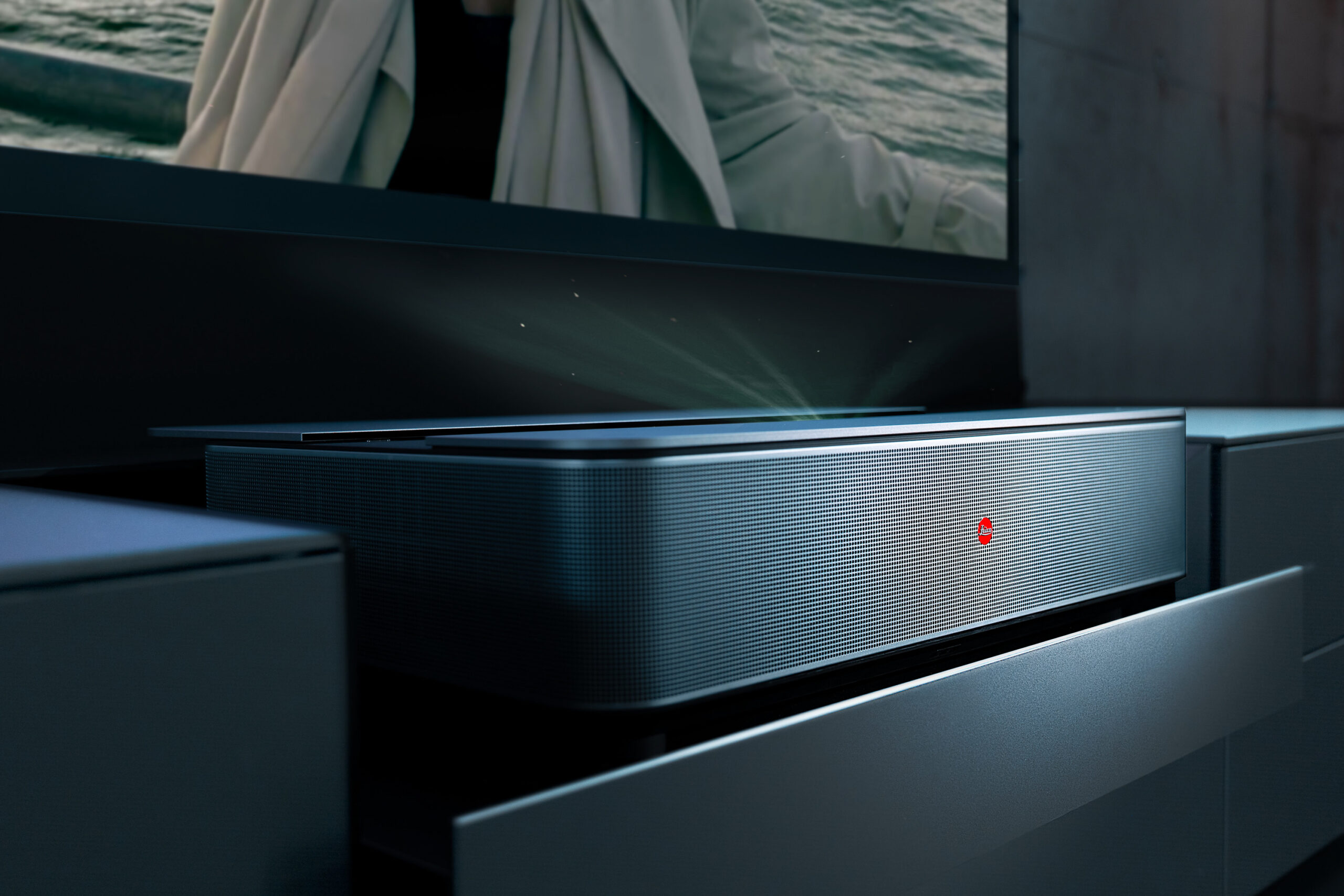
Projection Screens
Projection Screens are an essential part of a high-quality projection system, influencing perceived brightness, contrast, colour balance and image uniformity. Choose a fixed-frame screen for a dedicated cinema, a motorised or floor-rising model for a discreet living-room installation, or a specialised UST screen for an ultra-short-throw projector. Match the screen with a suitable model from our Projectors, and complete the cinema system with AV Receivers, Processors & Amplifiers, Home Cinema Speakers and Subwoofers.


How to Choose a Projection Screen
A projection screen should be selected together with the projector, room and seating position. Screen construction, material, gain, aspect ratio, viewing angle and ambient-light behaviour can significantly affect the final picture. Hi-Fi Market can help match the screen to the projector and plan its position as part of a complete home cinema or living-room system.
A fixed-frame screen provides a permanently tensioned and consistently flat viewing surface. It is often the preferred solution for a dedicated home cinema where the screen remains visible and the room is designed around it. Fixed-frame models can also support acoustically transparent materials, allowing the front loudspeakers to be positioned behind the image.
A motorised screen can retract into a ceiling or housing when it is not in use, making it suitable for shared living spaces. A floor-rising screen lifts upward from a cabinet and is particularly useful where ceiling installation is impossible or undesirable. Both solutions require careful planning of screen position, furniture, power supply and viewing height.
Ultra-short-throw projectors require screens specifically designed for their steep projection angle. A suitable UST screen helps reject light arriving from other directions while directing the projector’s image toward the viewer. Using an ordinary screen with a UST projector can lead to uneven brightness, visible surface imperfections and reduced contrast.
Ambient-light-rejecting screens can improve perceived contrast in living rooms where complete darkness is not practical. However, screen performance depends on projector type, installation angle and the direction of the room light. In a properly darkened cinema room, a more neutral screen material may provide wider viewing angles and more natural image reproduction.
Screen size should be chosen according to viewing distance, room width, projector throw requirements and the type of content. A 16:9 screen is the most versatile choice for modern films, television and streaming, while wider cinema formats may suit a dedicated theatre. The bottom edge of the image should remain comfortable for viewers without interfering with furniture or loudspeaker placement.
An acoustically transparent screen allows the centre and front loudspeakers to be installed behind the image, creating a more authentic cinema layout where voices appear to come directly from the screen. The screen material, distance from the loudspeakers and available space behind the frame must be planned carefully to preserve sound quality and avoid visible or audible interference.